

From Venice to Florence: an Assagioli biography spanning early psychoanalysis, Fascist imprisonment, esoteric roots, and the rise of a global healing movement
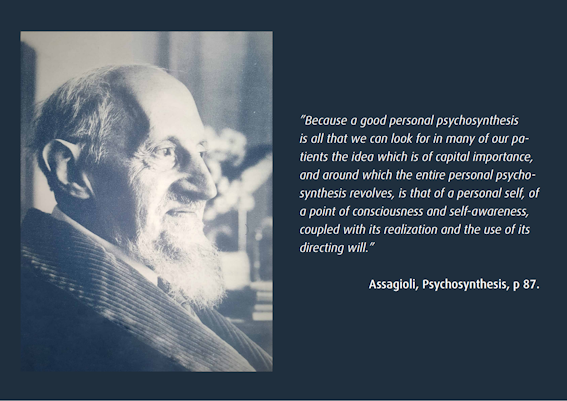
By Kenneth Sørensen, MA Psychosynthesis
Abstract
In this portrait, Kenneth Sorensen traces the most comprehensive Assagioli biography available online, covering the founder of psychosynthesis from his birth in Venice in 1888 through his death in 1974. The account follows Assagioli’s early engagement with Freud and Jung during the birth of psychoanalysis, his founding of psychosynthesis as a broader psychology encompassing will, love, and the superconscious, and his imprisonment under Fascism, which became a turning point for his understanding of inner freedom. The biography also examines his philosophical roots in Theosophy and Eastern mysticism, his marriage to Nella Ciapetti, and his role in the emergence of humanistic and transpersonal psychology. Sorensen draws on published sources and archival material to situate Assagioli within twentieth-century intellectual history.
This is the most comprehensive biography of Roberto Assagioli currently available online. It outlines some of the most essential traits in his work, personality, and private life.
Roberto Assagioli was very reluctant to give interviews about his life, as he thought that it was wrong to focus on him as a person. Focus had to be on Psychosynthesis.
However, pushed by his colleagues, he agreed at the end of his life to have a biography made, and he chose the Boston psychotherapist Eugine Smith to make it. Assagioli died shortly afterwards, in 1974, and the biography was never made. In 2019, the Institute of Psychosynthesis in Florence published a book titled Assagioli in His Own Words, a collection of fragments from an autobiography that includes some of the notes from Mr Smith’s interview. The booklet can be obtained through the institute. However, most of what we know about Assagioli’s personal life comes from his own writings and from people who have worked with him or otherwise known him. There is, however, a detailed biography of Roberto Assagioli written by Paola Giovetti, which I have used as a background for this article.
Roberto Assagioli and the Question of Biography

Any attempt to present the life of Roberto Assagioli therefore raises a methodological question. While he consistently emphasized the primacy of ideas, principles, and inner experience over personal history, his life nevertheless unfolded within specific cultural, historical, and institutional contexts. These contexts shaped both the formulation and the transmission of psychosynthesis. A biographical account cannot capture the inner dimensions to which Assagioli pointed, but it can illuminate the external conditions under which his work developed. The following sections therefore present selected aspects of his life, not as an end in themselves, but as a background to his psychological and spiritual contributions.
Childhood, Family Background, and Education
Roberto Marco Grego was born in Venice, Italy, on February 27, 1888. Here he spent his childhood. Roberto’s father died when Roberto was 2 years old, and his mother, Elana Kaula (1863-1925), remarried Dr. Alessandro Emanuele Assagioli in 1891, which gave Roberto his last name.

Assagioli grew up in a cultural upper-middle-class Jewish family with an interest in art, music and literature, where he received private lessons, as was typical for his time and class. His appreciation of beauty, art, and music was stimulated early and is clearly part of the basis for Psychosynthesis.
It may have been his mother’s studies of Theosophy that, early in his life, awoke his great interest in Eastern philosophies and in the higher spiritual potentials of mankind. Theosophy is a philosophy formulated in the late 19th century and later developed into a movement, with its roots in North America, later spreading to Europe and the East. The philosophy is even older, with roots in the mystic traditions of both East and West.
In his home, both Italian, English, and French were spoken. He was a curious child, eager to learn, and later he learned to speak Greek, Latin, German, Russian and Sanskrit before he was 18 years of age. He loved to formulate himself in writing, and already at the age of fifteen, he published the article ” Unconscious wishes and conscious work ” in the periodical “Giornale de Venezia”.
At an early age, he was interested in international relations, and he traveled a lot, also alone. At the age of 17, he went to Russia, which promoted his ideals of freedom, rooted in non-violent, non-dogmatic social systems. His many journeys taught him that man is the same, no matter which country he may come from, and that deep down in everybody is a desire to develop one’s highest potential.
In 1904, his parents moved to Florence, where he lived most of his life. Here, he studied at the faculty of medicine, Istituto di Studi Superiori, and received his medical degree, specializing in neurology and psychiatry.
After World War I, he lived and worked for some years in Rome, where he married Nella in 1922 (see bio and picture below). They had a son the same year, who was named Ilario Assagioli. The marriage was close and loving, lasting 51 years.
Education and early intellectual work
In 1907, he began a doctoral dissertation and finished it at the age of 21, entitled ” Psychoanalysis . Here, he also presented a vision of a holistic approach to psychology with a focus on human growth and human experiences with spiritual dimensions. This approach aimed at living a more complete life, and as he himself puts it, “To live as well as possible, and look at oneself with a smile.”
From Psychoanalysis to Psychosynthesis
Almost at the same time, he finished a critical article on psychoanalysis, which he considered limited and unfinished. However, he was deeply involved in the exploration and development of Freud’s discoveries concerning childhood and the unconscious. In an interview, The Golden Mean of Roberto Assagioli , by Sam Keen from “Psychology Today”, December 1974, Assagioli answers the question about the significant differences between psychoanalysis and Psychosynthesis:
“We pay far more attention to the higher unconscious and to the development of the transpersonal self. In one of his letters, Freud said, “I am interested only in the basement of the human being.” Psychosynthesis is interested in the whole building. We try to build an elevator which will allow a person access to every level of his personality. After all, a building with only a basement is very limited. We want to open up the terrace where you can sunbathe or look at the stars.”
His main criticism was that psychoanalysis was too focused on the pathological side of the psyche and failed to focus on and strengthen what is healthy as a path to healing. Also, Assagioli said that human consciousness had more layers than Freud’s model included. He wanted to create a psychology that contained the urges, but also love, will, wisdom, and spirituality. In other words, a psychology focused on the whole human being and grounded in a set of unique, foundational principles of psychosynthesis . He later presented the integration of dynamic psychology into psychosynthesis in his article Dynamic Psychology and Psychosynthesis .
In the same period, he wrote his treatise and maintained his psychiatric practice at San Salvador’s psychiatric hospital.
In 1909, in Rivista di Psicologia Applicata he published the article ” La psicologia delle idee-forze e la psicogogia ” (” Psychology of ideas-forces and psychagogy “), and in La Voce, the article: “Per una moderna psicagogia” (“For a modern psychagogy”), where he proposes a vision of man containing, in germ, the key points of Psychosynthesis.
Already in the beginning of the 20th century, he published several articles, bordering on medicine, pedagogy, philosophy, culture, and religion, which later formed the basis of Psychosynthesis. In 1906, he published his first comprehensive article on Psychosynthesis in Ferrari’s magazine, inspired by Freud’s article “ Jokes and their relation to the unconscious ”, entitled “ Gli effete del riso e le loro aplicaciones pedagoiche ”. It dealt with the significance of laughter and its relation to education. The article is known today as “Smiling Wisdom”.
Assagioli had a broad interest in philosophy and culture and participated in groups of young liberal free thinkers in Florence at the time. He was one of the most active editors of the cultural magazine “Leonardo” in Florence up to 1907. The magazine was the meeting place for the young intellectuals of Florence. It was founded in 1903 by one of his closest friends, self-educated author and intellectual Giovanni Papini.

Photo : The editors of “ Leonardo ”: Assagioli, Papini and Vailati.
At an early stage Assagioli had a clear feeling that the human being was not just a high-ranking animal or a machine. This was in opposition to the ruling concept, namely that medicine and psychology could be understood in the same way as other technical fields.
In 1911 he began formulating the concepts of Psychosynthesis, and he continued to dedicate his entire professional life to this task.

Psychiatric Career and the Formation of Psychosynthesis
Having finished his studies in 1910, Assagioli was trained in psychiatry in Switzerland at the psychiatric hospital Burghölzli in Zürich with Eugen Bleuler. Bleuler was the pioneer who defined schizophrenia, and he was one of the first doctors to accept psychoanalysis. At the time, Assagioli opened the first psychoanalytic practice in Italy. It is said that he was not satisfied with either his work or the results of his clinical work. Alongside his studies at Bleuler’s, he continued to develop his psychology in Italy. At first, he called it Bio-Psychosynthesis, and later Psychosynthesis. He was not the first to use the term “psychosynthesis”; Bezzola also used it.

In his early clinical practice, Assagioli applied psychoanalytic techniques. Still, his vision of the human being led him to compose a comprehensive analytical apparatus that encompassed love, wisdom, creativity, and will. His attitude was not that psychoanalysis was wrong, but rather that it was incomplete.
Already while working in Zurich, he was absorbed in psychological studies with a special interest in the works of William James and Henri Bergson. Here he met Carl Gustav Jung and befriended him. According to Assagioli himself, it was Jung’s psychology that was closest to Psychosynthesis. (Read the article: Jung and Psychosynthesis )
As the only Italian, Assagioli was a member of the Freud Society of Zurich, which consisted of pioneers of psychoanalysis. He was also a member of ” The International Psychoanalytic Society “. He was deeply involved in the exploration of psychoanalysis, and with Freud and Jung, he contributed to the foreword of the official ” Jahrbuch für Psychoanalytische und Psychopathologische Forschungen “, in which he wrote an article entitled ” Freud’s Theories in Italy ” (Firman/Gila 2002). He contributed articles and commentaries to Freud’s second periodical, “Psychoanalysis”. He started a study group with 19 members to understand the human psyche.
A published letter from Jung to Freud shows Assagioli’s hopes of bringing psychoanalysis to Italy:
“A very pleasant and perhaps valuable acquaintance, our first Italian, a Dr. Assagioli from the psychiatric clinic in Florence. Prof. Tanzi assigned him our work for a dissertation. The young man is very intelligent, seems to be extremely knowledgeable and is an enthusiastic follower, who is entering the new territory with the proper brio. He wants to visit us next spring.” (McGuire 1974, 241)
Assagioli never met with Freud in person, but corresponded with him.

In the history of psychoanalysis, he is one of the first Italian pioneers. That in itself made him stand out in a time when all studies of the human mind were considered with skepticism. Simultaneously, he worked – as we have seen – to develop Psychosynthesis. He had his ideas and thoughts communicated, among other places, in his periodical “Psyche” from 1912-1915, which had to close because of the war. His articles were later published in another periodical, named “Ultra”. They are said to have had an explosive effect on the culture of the time. In “Psyche,” he translated and published the first of Freud’s writings in the Italian language, authorized by Freud himself. Another interesting fact is that Assagioli, early in his career, showed an interest in parapsychological research, something he shared with C. G. Jung. For his extensive writings on parapsychology, see Roberto Assagioli on Parapsychology.”
During World War I, he served as a doctor and a psychiatrist.
Marriage, Collaboration, and Family Life

On August 12, 1922, Roberto Assagioli married Nella Ciapetti , who became a lifelong companion, close collaborator, and steadfast supporter of his work. Nella was an independent and intellectually active woman, distinguished by a strong temperament and will. She was herself an accomplished writer and lecturer, particularly within the field of Theosophy, which she appears to have embraced even before her future husband. Her mother, Eloisa, played a decisive role in introducing her to Theosophical ideas.
As early as 1912, Nella published the article “Nel Raggio di Sole” in the periodical Ultra , in which she compared the illuminating power of a ray of sunlight to intuitive flashes penetrating the darkness of the human soul, inviting readers to attend to their silent guidance. This early text already reflects her enduring interest in intuition, inner illumination, and spiritual perception.
Nella Ciapetti and Roberto Assagioli both frequented the “Roma” Group of the Independent Theosophical League, where it is highly likely that they first met. Contemporary chronicles from 1916 describe her as a “young and cultured woman… with a heart inflamed for theosophical doctrines,” and as a capable and energetic propagator of these teachings. During the years that followed, Nella and Roberto worked closely together, giving lectures, conducting courses, and publishing articles—especially for Ultra —at an intense pace that continued until around 1930.
In 1926, the Assagioli family moved to Rome. That same year, Roberto Assagioli was appointed Vice-President of the “Roma” Theosophical Group, whose headquarters from 1928 were located at Via A. Bosio 15—the Assagioli family residence. The home thus functioned as an important meeting place for spiritual, philosophical, and cultural activity.
Alongside her Theosophical commitment, Nella cultivated a strong interest in parapsychology. She organized well-attended “metapsychic groups” in her home and took a keen interest in experimental investigations in this field. After the premature death of her son Ilario in 1951, she also facilitated a small circle for mediumistic sessions, an area of exploration that appears to have gained personal significance for her during that period. Roberto Assagioli, however, deliberately did not participate in these meetings, stating that he had moved beyond that stage of spiritual inquiry.
Throughout her life, Nella Ciapetti Assagioli remained an intellectually autonomous figure whose spiritual interests both intersected with and diverged from those of her husband, contributing in her own right to the cultural and spiritual milieu in which psychosynthesis developed. Louisa Lunelli offers a close personal account of Roberto Assagioli’s family life.
Institutes, Teaching, and Theoretical Development
In 1926, Assagioli opened the first institute in Rome, “ Istituto di Cultura e Terapia Psichica ”, which later became “Istituto di Psicosintesi”. In the letter of invitation for the opening, it is stated that his inaugural speech will be about developing the will. One of his most important books later got the title ” The Act of Will “. It appeared shortly before he died in 1974. In 1927, the Institute published a book called “ A New Method of Treatment – Psychosynthesis ”. And in 1933, he was allowed to call his school in Florence “ Istituto di Psicisintesi ”. The institute was headed by Lady Spalletti Raspoini, who was also the president of “The National Council of Italian Women”.
In 1928, he gave a series of lectures at the institute, called ” The Energies Latent in Us and Their Use in Education and in Medicine “, which, in time, came to shape the theoretical basis for the work with opposites. In short, Psychosynthesis works on the hypothesis that any emotion or reaction has an opposite, and the task is to unite them into a synthesis. What brings about the synthesis is the active I, the observer and willing, the controlling factor in the human being, and later the higher Self. His unique understanding of transpersonal psychology is evident in his view of the superconscious and the Self.
Assagioli agreed with Freud that healing childhood traumas and developing a healthy ego were necessary goals. But in broad outline, his work sought to show that human development does not stop there and that the healthy person has the growth potential, which Maslow later called “self-actualization”. Assagioli went further and sought to show that human potential also includes the possibility of experiences with spiritual and transpersonal dimensions.
Thus, Psychosynthesis is the earliest forerunner of the humanistic and transpersonal psychology of the 1960s, which forms the third and fourth wave in the history of Western psychology.
On this basis, he becomes the co-editor of both the “ Journal of Humanistic Psychology ” and the “ Journal of Transpersonal Psychology ”.
It was essential to Assagioli that Psychosynthesis be viewed as an open psychological system in continuous development, rather than a religious or philosophical doctrine. In his first book, “Psychosynthesis”, he writes:
“Psychosynthesis does not aim nor attempt to give a metaphysical or a theological explanation of the great Mystery – it leads to the door, but stops there.” (p. 5)
Therefore, it was also essential for him to ensure that the various schools and institutes that arose around the USA and in Europe remained independent and not centrally controlled. He was not at all interested in leading any movement or organization, and he refused to have any administrative control over the development of Psychosynthesis.
Assagioli’s fundamental view includes both the individual and society, with a focus on synthesis and unification rather than analysis and splitting into smaller parts. Assagioli attempts to create a psychology that synthesizes Eastern mysticism and philosophy with Western psychoanalysis and logic. It was important to Assagioli that Psychosynthesis remained scientific. In his article , Self-Realization and Psychological Disturbances, he explores the relationship between self-realization and psychological disturbances and demonstrates his ability to synthesize the East and the West.
Philosophical and Spiritual Influences

Like CG Jung, Assagioli was inspired by Eastern and Western mysticism and esotericism. As mentioned before, both his mother and his wife were theosophists. And the source of Theosophy from the Hindu/Neo-Platonic tradition is essential in his thinking. When it comes to his overall philosophy, there is no doubt that he adheres to monism; however, Assagioli’s monism is grounded in a coherent form of evolutionary bio-psycho-spiritual monism: the view that reality is a single, layered continuum of energy in which spirit and matter are not opposed substances but degrees of the same living whole, and that the human being is both a microcosm of this whole and a conscious agent of its evolutionary unfolding.
The coherence with Eastern and Western mystic traditions is apparent in his concept of the Self, which highly resembles the Eastern description of “Atman”. To Assagioli, the Self is a nucleus of consciousness and will, which is not synonymous with the body, the emotions, or the thoughts. In preparation for the unfinished book Height Psychology and the Self, which was never published, Assagioli gives a clear distinction between the superconscious and the Self.
For Assagioli, self-realisation is an evolution of consciousness, in which still higher expansions of consciousness lead to a unification with the universal Self. These thoughts are also characteristic of Eastern yoga traditions. The Neoplatonic element is evident in his concept of emanation. In his book Transpersonal Development, p. 102, he writes:
“We have now reached the fifteenth group of symbols, that of resurrection an return, what in the gospels is referred to as the return of the prodigal son to his fathers house. This is a return to a previous state and points to a return to the original primordial being. This presupposes an emanatistic theory of the soul, descending, becoming one with matter, and then returning to its “home”, the heavenly homeland –not as it was before, but enriched by the experience of self-awareness which has come to maturity in toil and conflict”
Assagioli also makes several references to Western mystics, such as John of the Cross and Saint Francis of Assisi. Within Western psychology, there is no doubt that William James, CG Jung, and Viktor Frankl were spiritually related fellows. Throughout his life, in his understanding of the pathological conditions of the lower unconscious, he drew on many psychodynamic theories. He believed that before spiritual development, there had to be a psychoanalysis – not in the classic sense of the word – but a profound psychological transformation.

But to establish his true spiritual affiliations, Theosophy is the stronger candidate. He was a close friend of esotericist Alice Bailey and joined her Arcane School by the beginning of the 30’s. He also wrote the foreword to the Italian edition of Alice Bailey’s commentary on Patanjali’s Yoga Sutras. ( Photo : Assagioli with Alice Bailey and collaborators)
He did not want publicity about this because he wanted to be seen as a scientist, first and foremost. When psychologist Jim Fadiman visited Assagioli in 1972, he noticed a portrait of Madame Blavatsky, the founder of Theosophy, in his waiting room. Answering the question, why it was necessary to be silent about his esoteric affiliations, Assagioli said, “It is my religion, and until I die I want silence about it.” (Schuller, 1988)
He never tried to hide that his religion also included reincarnation. In an interview with Sam Keen, he relates:
“Death looks to me primarily like a vacation. There are many hypotheses about death and the idea of reincarnation seems the most sensible to me. I have no direct knowledge about reincarnation but my belief puts me in good company with hundreds of millions of Eastern people, with the Buddha and many others in the West.”
But Assagioli clearly distinguished between his own religion and his work as a transpersonal psychologist and psychiatrist. He was not an intellectual in the usual sense of the word; he was far more a mystic, and his theories about man were to a very high degree based on his own inner experience.
Key Texts, War, and the Maturation of Psychosynthesis
In the 1930s, he published several articles, later collected in his first book, “ Psychosynthesis, ” in 1965. It is here we find two of the most important articles on psychosynthesis: “ Dynamic Psychology and Psychosynthesis ” and “ Self-realization and Psychological Disturbances ”. In the first article from 1933, he presented for the first time his oval diagram, or as it is also called, the “egg-diagram”, as a picture of the human psyche, where the relationship between the conscious, the unconscious, and the collective unconscious is outlined, establishing the phases of psychosynthesis. The second article is about crises connected to spiritual development.

In 1938, the Instituto de Psicosintesi in Florence was shut down by Mussolini’s Fascist government, being critical of Assagioli’s Jewish background, his humanism, and internationalism. That same year, he was arrested, imprisoned, and put into solitary confinement for a month. This turned out to be of great importance to the further development of Psychosynthesis. He is said to have told his friends that his time in prison was an interesting and valuable experience, which gave him the possibility to exercise psycho-spiritual practice. Feeling powerless, he made an important discovery about the will. He discovered that he himself could choose how to react to his imprisonment.
So he turned his imprisonment into an opportunity to investigate the inner depths of consciousness by meditating for several hours daily and writing articles about his experiences. Later, he said he had never felt such peace and enjoyed being alive so much. Just before his death, he worked on an article about this experience, entitled ” Freedom in Jail “.
World War II was a hard time for his family, as Assagioli lived underground and often slept under the stars. In 1943, he was actually hunted and had to hide in distant mountains. Here he met with a British parachute soldier and several escaped prisoners. He experienced two dangerous episodes where Nazis chased him personally. They plundered and destroyed his family’s farm near Florence.
This life during the war probably had a part in weakening the health of both himself and his son, Ilarios, who died from a severe lung disease at the young age of 28.
After the end of the war in 1945, Assagioli resumed spreading and developing Psychosynthesis. The Institute de Psicosintesi was re-established in Florence, where it functions today. In 1951, he established ” The Italian Union for Progressive Judaism “, a branch of ” The World Judaism Union for Progressive Judaism “, based on the concept of openness, understanding, and cooperation between peoples and religions, to create an organic and creative synthesis of the entire humanity.
Psychosynthesis began spreading to the USA and Europe after World War II. In 1957, “The Psychosynthesis Research Foundation” was established in Delaware, USA. It was later transferred to New York, and this foundation published several of Assagioli’s texts in English. In 1958, following Assagioli’s visit there, a school was established in Valmy, USA, dedicated to the education and research of Psychosynthesis. Later, other schools of Psychosynthesis were established in many places in the USA, Switzerland, Austria, and Great Britain. In those years, Assagioli cooperated with A. Maslow, whose article ” The Creative Attitude ” was published by “The Psychosynthesis Research Foundation”.
During the 1970s and 80s, Psychosynthesis expanded in North America and Europe. Many schools appeared, many of which later closed. Today, it is possible to take an MA in Psychosynthesis from the Psychosynthesis Institute in London.
In Scandinavia, there are institutes for Psychosynthesis in Sweden and Norway.
Today, Psychosynthesis is recognized in the European Association for Psychotherapies (EAP) with its own umbrella organization, ” The European Federation for Psychosynthesis Psychotherapists “.
During his career, Assagioli wrote several hundred articles and essays, many of which have been translated into several languages. A significant number of these can be found on this site . The best-known books are “ Psychosynthesis ” from 1965 and “ The Act of Will ” from 1974. Even up to his death, he worked on a book, which was published posthumously, entitled “ Transpersonal Development ”. Another small book exists from his hand: “ Psychosynthesis Typology ”, which unfolds a sketch of the seven ways to self-realisation.
” The International Psychosynthesis Directory ” was published in 1994-95; at that time, there were 107 psychosynthesis institutes in 32 countries. Some of these have probably been closed, and others may have appeared since then.
Assagioli’s Place in Twentieth-Century Psychology
We will finish this biographical description of the life and works of Assagioli with a statement from Piero Ferrucci, one of Assagioli’s students and himself a prominent teacher and author. Due to his cooperation with Assagioli for many years, he is probably the person who knew Assagioli best. Among other books, he is the author of “What We May Be” and “Inevitable Grace”.
In his foreword to ” A Psychology with a Soul ” by Jean Hardy, Piero Ferrucci writes:
“As far as I know, Roberto Assagioli is the only individual who has participated personally and actively in the unfolding of two distinct and fundamental revolutions in twentieth-century psychology.

The first revolution was the birth of psychoanalysis and depth psychology in the beginning of the century: Assagioli, then a young medical student, presented his MD dissertation on psychoanalysis, wrote in the official Jahrbuch side by side with Freud and Jung, and was part of the Zurich Freud Society, the group of early psychoanalytical pioneers. The idea of unconscious processes in the mind made a lasting impression on him, an impression which he later developed into a variety of hypotheses well beyond the boundaries of orthodox psychoanalysis.
The second revolution in which Assagioli participated was the creation of humanistic and transpersonal psychology in the 1960s. AH Maslow was the pioneer of these new developments. The main idea was simple: rather than focusing on pathology in order to define the human being (as psychoanalysis had all too often done), or on the structural similarities between the human and the animal nervous system (as behaviorism suggested), the humanistic and transpersonal point of view, while not denying the findings of the other schools, put the main emphasis on the organism’s striving for wholeness, on the human being’s potential for growth, expansion of consciousness, health, love and joy.
Richness in contacts and interchanges was quite important in Assagioli’s background: consider such diverse acquaintances (some of them brief, others lasting) as Italian idealist Benedetto Croce, Russian esotericist PD Ouspensky, German philosopher Hermann Keyserling, Indian poet Rabindranath Tagore, Sufi mystic Inhayat Khan, Zen Scholar DT Suzuki, Tibet’s explorer Alexandra David Neel, plus psychologists Viktor Frankl, the founder of logotherapy, Robert Desoille, creator of the guided daydream, and CG Jung himself, before and after his break with psychoanalysis. Such contacts, coupled with a life of experimentation and reflection, provided an undoubtedly wide perspective for Assagioli’s creation, which he called Psychosynthesis.”
Sources:
1. Assagioli, Roberto , Life As a Game And Stage Performance. Psychosynthesis Training Center, 1983.
2. Ferrucci et. al., Roberto Assagioli 1888-1988, Instituto di Psiconsintesi, 1988
3. Firman, John, Dimensions of growth,
4. Firman, John, A psychology of the Spirit, Suny, 2002
5. Hardy, Jean, A Psychology With a Soul, Woodgrange Press, 1996
6. Keen, Sam, The Golden Mean of Roberto Assagioli, Psychology Today, December 1974,
7. Löfwendahl, Peter, Discover Psykosynthesis, Huma Nova Förlag, 2003.
8. McGuire, William, ed. 1974. The Freud/Jung Letters. Vol. XCIV, Bollingen Series. Princeton: Princeton University Press.
9. Russell, Douglas, Psychosynthesis and Western Psychology
10. Schuller, Michael, Psychosynthesis in North America, monograph 1988 published by the author
11. Unknown, In Memoriam: Roberto Assagioli (1888-1974), Synthesis Journal II, 1975
12. Roberto Assagioli – The Life and work of the Founder of Psychosynthesis, by Paola Giovetti, 2024.
See also Piero Ferrucci’s recollections of his friendship with Roberto Assagioli :

See Roberto Assagioli Video


Hi thank you for your writings. I did psychsynthesis in Ireland then Logotherapy. I was wondering where I could get a copy of Assagioli’s ‘Life as a Play’ piece? And also if you think his theory was inspired by Advaita Vedanta. Seems some strong similarities there.